
QIAMAH
Do Not Follow Pharaoh: He Walks Ahead — and His Followers Follow Him into Hell
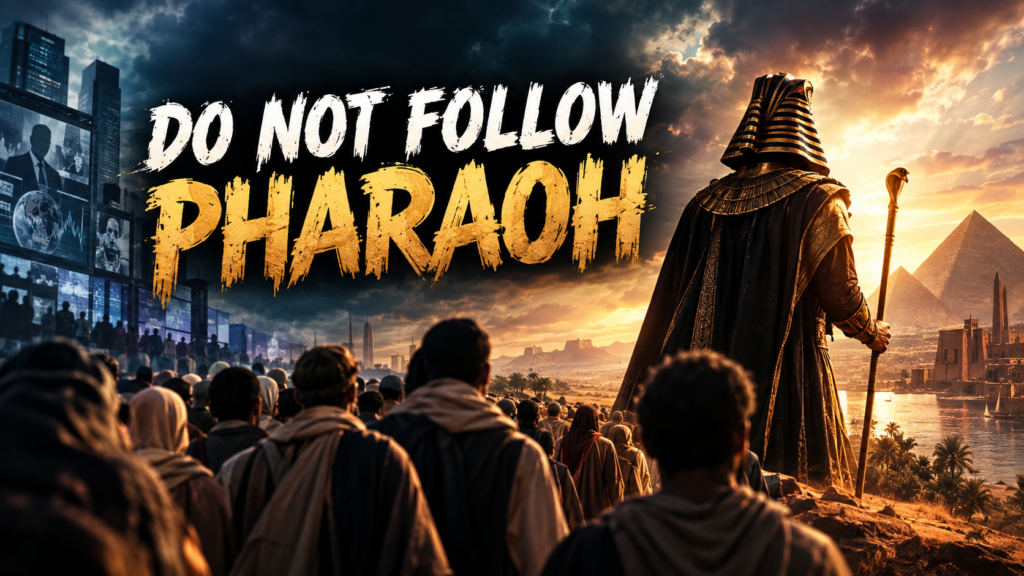
The story of Pharaoh is not merely the story of a king who lived during the time of Prophet Musa (Moses), peace be upon him.
The Quran establishes a far more terrifying pattern:
Pharaoh leads.
People follow.
When the truth becomes clear, they wish to turn back.
But there comes a moment when saying, “Now I believe,” is already too late.
Then comes regret over their own choices.
And the Quran presents a stern depiction of the end of that journey:
فَٱتَّبَعُوٓا۟ أَمْرَ فِرْعَوْنَ ۖ وَمَآ أَمْرُ فِرْعَوْنَ بِرَشِيدٍ
“They followed the command of Pharaoh, although Pharaoh’s command was not rightly guided.”
— Hud 11:97 (Quran.com)
The following verse continues:
يَقْدُمُ قَوْمَهُۥ يَوْمَ ٱلْقِيَـٰمَةِ فَأَوْرَدَهُمُ ٱلنَّارَ
“He will lead his people on the Day of Resurrection and bring them into the Fire.”
— Hud 11:98 (Quran.com)
Observe the sequence.
In this world: they follow Pharaoh.
On the Day of Resurrection: Pharaoh stands before them.
Their final destination: النَّار — Hell.
This is not a depiction of a man going astray alone.
It is a depiction of a leader together with his followers.
PHARAOH DID NOT MERELY DECEIVE — HE MADE PEOPLE FOLLOW HIM
Al-Qasas 28:41 uses an even more severe expression:
وَجَعَلْنَـٰهُمْ أَئِمَّةً يَدْعُونَ إِلَى ٱلنَّارِ
“And We made them leaders who invite others to the Fire.”
— Al-Qasas 28:41 (Quran.com)
This is where the characteristics of Dajjal become important as a pattern.
The term Dajjal is associated with deception, disguise and falsification.
Therefore, when Pharaoh is described as possessing the characteristics of Dajjal, it does not mean that the Quran literally identifies Pharaoh as al-Masih ad-Dajjal.
Rather, Pharaoh is the bearer of Dajjal’s message!
This means:
He deceives.
He establishes a system that people trust.
He stands at the forefront.
And people follow him because they believe that his path is the right one.
The most successful deception is not one that everyone immediately recognises as deception.
The greatest deception occurs when people follow with complete confidence, without realising that they are being deceived.
That is why Surah Hud does not merely state that Pharaoh was wrong.
The verse states:
فَٱتَّبَعُوٓا۟ أَمْرَ فِرْعَوْنَ
“They followed the command of Pharaoh.”
The problem is not Pharaoh alone.
The problem is also his followers.
“NOW I BELIEVE!”
Pharaoh eventually professed his faith.
When drowning had overtaken him, he declared:
آمَنتُ أَنَّهُ لَا إِلَٰهَ إِلَّا ٱلَّذِيٓ ءَامَنَتْ بِهِۦ بَنُوٓا۟ إِسْرَٰٓءِيلَ وَأَنَا۠ مِنَ ٱلْمُسْلِمِينَ
“I believe that there is no god except the One in whom the Children of Israel believe, and I am among those who submit.”
— Yunus 10:90 (Quran.com)
But the response came in a single, striking word:
ءَآلْـَٰٔنَ
“Now?”
— Yunus 10:91 (Quran.com)
Why?
Because his profession of faith came only after death had appeared before his very eyes.
An-Nisa 4:18 explains the same principle:
حَتَّىٰٓ إِذَا حَضَرَ أَحَدَهُمُ ٱلْمَوْتُ قَالَ إِنِّى تُبْتُ ٱلْـَٰٔنَ
“Until, when death comes to one of them, he says, ‘Indeed, I repent now.’”
Repentance in such a state is no longer accepted.
— An-Nisa 4:18 (Quran.com)
The Prophet ﷺ also said:
إِنَّ اللَّهَ يَقْبَلُ تَوْبَةَ الْعَبْدِ مَا لَمْ يُغَرْغِرْ
“Indeed, Allah accepts the repentance of His servant as long as he has not reached the stage of ghargharah.”
— Jami‘ at-Tirmidhi 3537, graded Hasan. (Sunnah.com)
The meaning is clear:
Do not become like Pharaoh —
waiting until your life has reached your throat
before finally declaring:
I BELIEVE.
PHARAOH WAS “SAVED IN HIS BODY”
Then comes Yunus 10:92:
فَٱلْيَوْمَ نُنَجِّيكَ بِبَدَنِكَ لِتَكُونَ لِمَنْ خَلْفَكَ ءَايَةً
“So today We will save you in your body so that you may become a sign for those who come after you.”
— Yunus 10:92 (Quran.com)
This brings us to the major question we have been discussing:
Does the statement, “We will save you in your body,” mean only that Pharaoh’s body became a corpse that was subsequently preserved?
Or does this verse have a deeper connection with Hud 11:98, which still places Pharaoh at the forefront of his people on the Day of Resurrection?
The interpretation that Pharaoh’s life was prolonged and that he did not die during that event is one possible reading derived from the relationship between these verses.
It is not a literal statement in the verse declaring, “Pharaoh did not die.”
Nevertheless, the question deserves to remain open because Yunus states:
نُنَجِّيكَ — We will save you.
And Hud states:
يَقْدُمُ قَوْمَهُ يَوْمَ الْقِيَامَةِ — He will lead his people on the Day of Resurrection.
Therefore, do not hastily close the discussion merely because of the popular depiction of a mummy.
The revealed texts must first be examined in relation to one another.
“WALKING AHEAD” — PEOPLE RECOGNISE HIM AS THEIR LEADER
يَقْدُمُ قَوْمَهُ
Pharaoh stands before his people.
This presents an image of leadership.
He is recognised.
He is followed.
But the most terrifying question is:
Do his followers truly know the reality of the one they are following?
A great deceiver does not arrive carrying a sign that says:
“I AM A DECEIVER.”
He comes in a form that people trust.
He comes offering solutions.
He comes with power.
He comes with a system.
He comes with promises of safety.
And people themselves choose to follow him.
This is the characteristic of Dajjal being discussed: falsehood that is accepted as truth.
THE TEST OF A RIVER: THE RIVER IS NOT TO BLAME
This is where Al-Baqarah 2:249 becomes particularly important:
إِنَّ ٱللَّهَ مُبْتَلِيكُم بِنَهَرٍ
“Indeed, Allah will test you with a river.”
— Al-Baqarah 2:249 (Quran.com)
Then:
فَمَن شَرِبَ مِنْهُ فَلَيْسَ مِنِّى
“Whoever drinks from it is not of me.”
But there is an exception:
إِلَّا مَنِ ٱغْتَرَفَ غُرْفَةًۢ بِيَدِهِۦ
“Except the one who takes a handful with his hand.”
The river itself is not the one at fault.
THE RIVER = THE TEST.
THE HAND = THE POWER TO CHOOSE.
DRINKING = THE ACTION.
THE CONSEQUENCE = THE RESPONSIBILITY.
That is why the principle we have established is precise:
THE RIVER IS NOT TO BLAME.
THE CHOICE IS.
When this verse is used as an analogy for modern technology, it does not mean that the word نَهَر literally refers to vaccines, medicines or any particular technology.
The principle is much broader:
When something is placed before human beings as a test, they still bear the responsibility to evaluate it and make their own choices.
Technology does not remove responsibility.
Authority does not remove responsibility.
The fact that large numbers of people are doing something does not remove responsibility either.
Because, ultimately:
it is one’s own hand that reaches out and takes it.
LAWWAMAH: WHEN THERE IS NO ONE ELSE LEFT TO BLAME
Surah Al-Qiyamah opens the door to a profoundly important understanding:
وَلَآ أُقْسِمُ بِٱلنَّفْسِ ٱللَّوَّامَةِ
“And I swear by the self-reproaching soul.”
— Al-Qiyamah 75:2 (Quran.com)
Lawwamah is the self-reproaching nafs.
Before the consequences become apparent, people can easily say:
“Everyone was doing it.”
“I was only following.”
“I trusted them.”
“I did not know.”
But Surah Al-Qiyamah brings human beings back to themselves.
In verses 75:13–15, human beings are informed of what they have sent ahead and what they have left behind. Indeed, a person becomes a witness against himself, even when he presents his excuses.
Thus, the suffering of Lawwamah can be summarised as follows:
I chose it.
I followed it.
I did not think carefully enough.
Now I must bear the consequences myself.
That is why the torment of regret can become more severe than the accusations of others.
Others do not need to condemn us.
Deep within ourselves, we already know.
WHEN LIFE REACHES THE THROAT
Surah Al-Qiyamah then brings this depiction to a moment that can no longer be postponed:
كَلَّآ إِذَا بَلَغَتِ ٱلتَّرَاقِىَ
“No! When it reaches the collarbones…”
— Al-Qiyamah 75:26 (Quran.com)
Then comes the realisation that this is the moment of separation.
This is where Surah Al-Qiyamah meets the story of Pharaoh.
Pharaoh:
He professed his faith only when drowning had already overtaken him.
An-Nisa:
A person wishes to repent only when death has already arrived.
The Hadith:
Repentance is accepted as long as the stage of ghargharah has not been reached.
Al-Qiyamah:
Life reaches the taraqi — the moment when separation becomes increasingly apparent.
All of these point towards a single warning:
DO NOT WAIT UNTIL THE EVIDENCE CAN NO LONGER BE DENIED.
Because at that moment, saying, “I believe now,” is no longer an expression of faith in something that has not yet been seen.
The reality is already before one’s eyes.
AL-FIL: EVEN THE GREATEST PLANS ULTIMATELY BECOME FUTILE
Surah Al-Fil presents the destruction of a grand scheme:
أَلَمْ يَجْعَلْ كَيْدَهُمْ فِى تَضْلِيلٍ
“Did He not make their plan go astray?”
— Al-Fil 105:2 (Quran.com)
Then:
وَأَرْسَلَ عَلَيْهِمْ طَيْرًا أَبَابِيلَ
“And He sent against them birds in flocks.”
And finally:
فَجَعَلَهُمْ كَعَصْفٍ مَّأْكُولٍ
“And He made them like eaten straw.”
— Al-Fil 105:3–5 (Quran.com)
Literally, the verse uses the expression ‘asf ma’kul, referring to vegetation or straw that has been eaten.
The depiction of “leaves eaten by caterpillars” is a visual analogy we use to illustrate destruction that gradually consumes a structure, piece by piece.
The connection we establish is therefore:
Human beings plan for safety →
Human beings pursue strength →
Human beings seek to overcome the weaknesses of the body →
Ultimately, كَيْدَهُمْ فِي تَضْلِيلٍ — the very plan itself may become futile.
Do not make science the enemy.
Do not make technology the enemy.
But neither should we treat the products of human hands as though they guarantee that humanity has conquered life and death.
This is the arrogance of Pharaoh in its most fundamental form:
Human beings begin to believe that they have complete control over something that is not entirely within their power.
THE MOST TERRIFYING HELL: WANTING TO DIE, BUT NEVER DYING
Is Hell merely fire?
The Quran presents an expression that is far more terrifying:
لَا يَمُوتُ فِيهَا وَلَا يَحْيَىٰ
“He will neither die therein nor live.”
— Ta-Ha 20:74 (Quran.com)
And once again:
ثُمَّ لَا يَمُوتُ فِيهَا وَلَا يَحْيَىٰ
“Then he will neither die therein nor live.”
— Al-A‘la 87:13 (Quran.com)
Imagine this suffering:
Death would bring an end to the pain — but death never comes.
Life should be something to enjoy — yet that existence is not a life that can be enjoyed.
This is the condition we describe as:
LIVING IN THE HOPE OF DEATH,
YET DEATH NEVER COMES.
And when this is combined with Lawwamah, the torment becomes twofold:
The body suffers.
And the self knows that its own choices have brought it to that place.
THE FOLLOWERS EVENTUALLY ARGUE WITH THEIR LEADERS
Ghafir 40:46 mentions the people of Pharaoh and the Day of Resurrection:
وَيَوْمَ تَقُومُ ٱلسَّاعَةُ أَدْخِلُوٓا۟ ءَالَ فِرْعَوْنَ أَشَدَّ ٱلْعَذَابِ
“And on the Day when the Hour is established: Admit the people of Pharaoh into the severest punishment.”
— Ghafir 40:46 (Quran.com)
The verses that follow describe the arguments among the inhabitants of Hell.
In this world:
“We followed you.”
When the consequences arrive:
“Can you now relieve us of some of our punishment?”
This is the tragedy of the followers.
As long as everything appears to be going well, the leader is praised.
When the consequences arrive, people begin searching for someone to blame.
But Lawwamah stands at the centre of it all:
Who chose to follow?
PHARAOH STANDS AHEAD — BUT IT IS OUR OWN HANDS THAT MAKE THE CHOICE
This is where all the revealed texts come together:
Pharaoh demonstrates the danger of a leader who deceives.
Dajjal represents the characteristics of falsification and deception.
The test of the river demonstrates that the choice still belongs to human beings.
Lawwamah demonstrates that the self will eventually reproach itself for its own choices.
Al-Fil demonstrates that even humanity’s greatest plans can become futile.
Pharaoh’s repentance demonstrates that we must not wait until death has reached the throat.
“Neither dying nor living” demonstrates how terrifying the consequences can be when even death is no longer a way out.
Therefore, do not merely ask:
“Who is Pharaoh?”
The more terrifying question is:
“WHO AM I FOLLOWING?”
And do not merely ask:
“Who is Dajjal?”
Ask:
“AM I CAPABLE OF RECOGNISING DECEPTION WHEN IT COMES IN A FORM THAT PEOPLE TRUST?”
Because Hud 11:98 does not depict Pharaoh walking alone.
He has قَوْمَهُ — his people.
They are behind him.
And the verse states:
فَأَوْرَدَهُمُ ٱلنَّارَ
“And he will bring them into the Fire.”
— Hud 11:98 (Quran.com)
CONCLUSION
Pharaoh has already demonstrated the gravest mistake:
He waited until drowning had overtaken him before declaring:
“I believe.”
Do not repeat that mistake.
Do not wait until:
the body has already changed,
the consequences have become apparent,
the way out has been closed,
life has reached the throat,
before finally saying:
“Now I believe.”
Because the warning conveyed through Pharaoh is not merely:
DO NOT BECOME PHARAOH.
The warning is far more personal:
DO NOT FOLLOW PHARAOH.
He walks ahead.
His followers walk behind him.
But every pair of feet walks according to its own choice.
And when Lawwamah awakens, a person’s final excuse may no longer be:
“They deceived me.”
Instead, it may become:
“WHY DID I CHOOSE TO FOLLOW?”
Do not wait until life reaches your throat before choosing to believe.
Do not wait until the consequences arrive before beginning to evaluate your choices.
Do not wait until your own Qiamah before asking who is truly walking ahead of you.