
MUKADDIMAH · M30
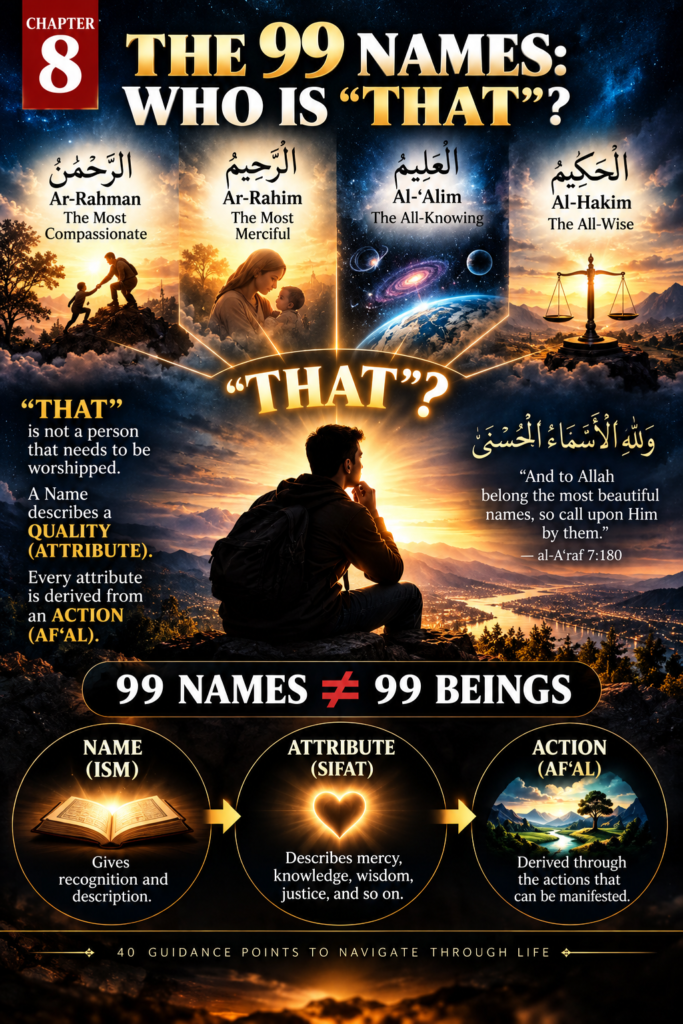
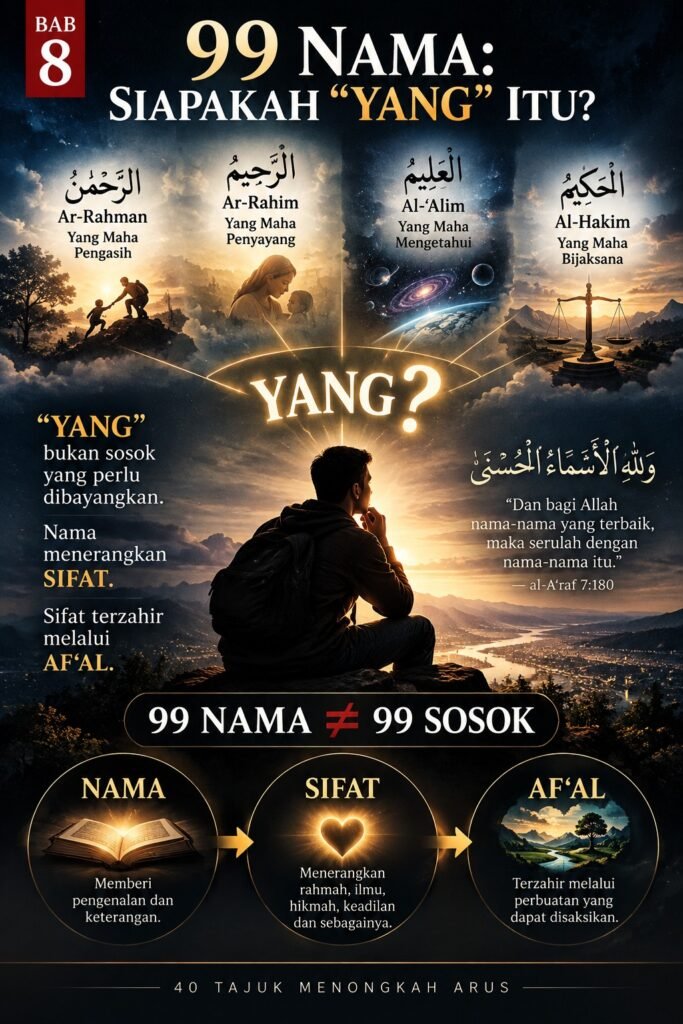
Ar-Rahman — The Most Compassionate.
Ar-Rahim — The Most Merciful.
Al-‘Alim — The All-Knowing.
Al-Hakim — The All-Wise.
We are accustomed to reciting these names.
But there is one expression that is often passed over without examination:
“THE ONE WHO.”
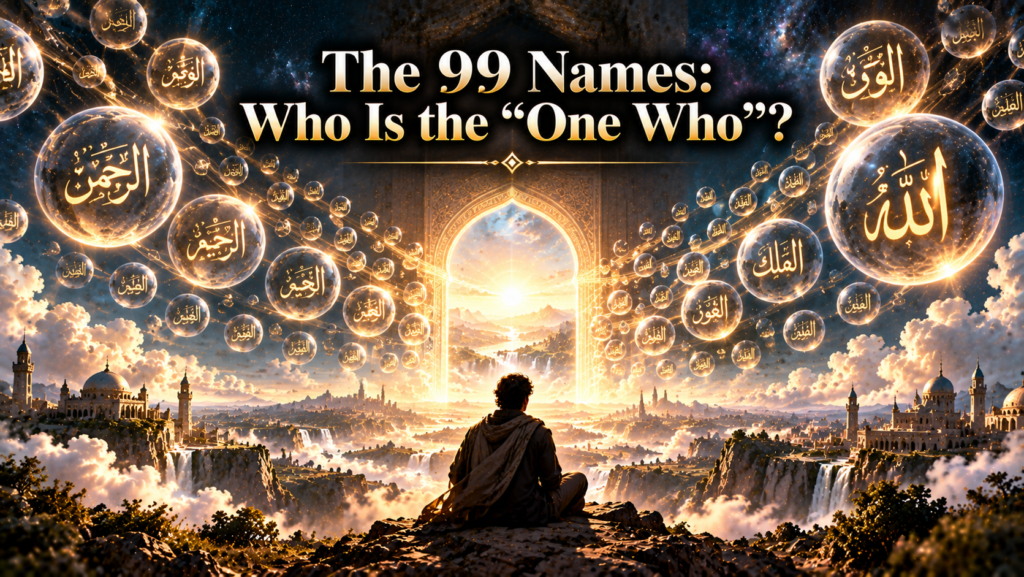
Who is the “One Who”?
Is each name pointing towards a figure, or is it describing an attribute?
⸻
1. THE QURAN REFERS TO THEM AS NAMES
Allah states:
وَلِلّٰهِ الْأَسْمَاءُ الْحُسْنَىٰ فَادْعُوهُ بِهَا
“And to Allah belong the most beautiful names, so call upon Him by them.”
— Al-A‘raf 7:180
The verse uses the word:
الْأَسْمَاءُ
“names”
A name functions as identification and description.
Therefore, when we say:
Ar-Rahman, we receive a description concerning mercy.
Al-‘Alim, concerning knowledge.
Al-Hakim, concerning wisdom.
This is consistent with the foundation established in Chapter 7:
A NAME DESCRIBES.
⸻
2. ALLAH AND AR-RAHMAN
Allah states:
قُلِ ادْعُوا اللَّهَ أَوِ ادْعُوا الرَّحْمَٰنَ ۖ أَيًّا مَّا تَدْعُوا فَلَهُ الْأَسْمَاءُ الْحُسْنَىٰ
“Say: Call upon Allah or call upon Ar-Rahman. Whichever name you call upon, to Him belong the most beautiful names.”
— Al-Isra’ 17:110
This verse brings the names Allah and Ar-Rahman together under:
الْأَسْمَاءُ الْحُسْنَىٰ
Therefore, many names do not mean many entities.
They indicate many descriptions.
⸻
3. LANGUAGE ITSELF SHOWS HOW IT WORKS
Suppose we say:
“Ali is compassionate.”
“Ali” refers to the person.
“Compassionate” describes his attribute.
When Ali helps someone, that attribute is manifested through action.
The sequence is:
SELF → ATTRIBUTE → ACTION
Or, in the terminology of the previous chapters:
ESSENCE → ATTRIBUTES → ACTIONS
“Compassionate” does not become a second figure.
It describes an attribute of the one who acts.
⸻
4. AR-RAHMAN AND ACTIONS
Allah states:
الرَّحْمَٰنُ
عَلَّمَ الْقُرْآنَ
خَلَقَ الْإِنسَانَ
عَلَّمَهُ الْبَيَانَ
“Ar-Rahman.
Taught the Quran.
Created the human being.
Taught him expression.”
— Ar-Rahman 55:1–4
After the name Ar-Rahman, the Quran immediately mentions Actions:
عَلَّمَ — taught
خَلَقَ — created
عَلَّمَهُ — taught him
The name provides a description.
Actions show how that description is manifested.
⸻
5. AL-HASHR PRESENTS THE NAMES AS DESCRIPTIONS
Allah states:
عَالِمُ الْغَيْبِ وَالشَّهَادَةِ هُوَ الرَّحْمَٰنُ الرَّحِيمُ
“Knower of the unseen and the seen; He is Ar-Rahman, Ar-Rahim.”
— Al-Hashr 59:22
Then:
الْمَلِكُ الْقُدُّوسُ السَّلَامُ الْمُؤْمِنُ الْمُهَيْمِنُ الْعَزِيزُ الْجَبَّارُ الْمُتَكَبِّرُ
— Al-Hashr 59:23
And:
الْخَالِقُ الْبَارِئُ الْمُصَوِّرُ
— Al-Hashr 59:24
This sequence provides various descriptions:
knowing, loving, showing mercy, preserving, creating, forming.
Each name opens another aspect of recognition.
⸻
6. THE HADITH OF THE 99 NAMES
The Messenger of Allah ﷺ said:
إِنَّ لِلَّهِ تِسْعَةً وَتِسْعِينَ اسْمًا، مِائَةً إِلَّا وَاحِدًا، مَنْ أَحْصَاهَا دَخَلَ الْجَنَّةَ
“Indeed, Allah has ninety-nine names, one hundred minus one; whoever comprehends them will enter Paradise.”
— Narrated by Al-Bukhari and Muslim
The important word is:
أَحْصَاهَا
The question is not merely how many names a person can recite.
The question is:
DO HUMAN BEINGS UNDERSTAND WHAT THOSE NAMES DESCRIBE?
A person may say:
Ar-Rahman
yet fail to understand mercy.
He may say:
Al-Haqq
yet fail to examine the truth.
He may say:
Al-Hakim
yet fail to understand wisdom.
⸻
7. CLASSICAL TAFSIR
Al-Tabari, when explaining Al-A‘raf 7:180, explains al-asma’ al-husna as the names by which Allah is called upon.
The foundation remains the same:
The Quran calls them names.
Therefore, before the mind forms an image, first ask:
WHAT DESCRIPTION DOES THAT NAME CARRY?
⸻
8. THIS IS WHERE “THE ONE WHO” NEEDS TO BE EXAMINED
Malay translations often use expressions such as:
“The One Who is Most Compassionate”
“The One Who is All-Knowing”
“The One Who is All-Wise”
The expression “the One Who” helps to structure the language.
But if it is not examined, the mind may form the image of a figure.
Yet in ordinary language, the phrase:
“the one who is compassionate”
merely describes someone’s attribute.
It does not create another entity.
Therefore, the true focus is on:
COMPASSIONATE
KNOWING
WISE
These are the attributes being described.
⸻
9. 99 NAMES ARE NOT 99 FIGURES
If every name is imagined as a separate figure, descriptions have been transformed into entities.
Yet:
mercy is not a body.
knowledge is not a body.
wisdom is not a body.
justice is not a body.
trustworthiness is not a body.
truth is not a body.
All of these are descriptions of attributes recognised through Actions.
⸻
10. A METHOD FOR READING THE 99 NAMES
The simplest method is:
NAME → ATTRIBUTE → ACTION
For example:
AR-RAHMAN
Name
↓
MERCY
↓
manifested through acts of compassion
⸻
AL-‘ALIM
Name
↓
KNOWLEDGE
↓
manifested through knowing
⸻
AL-HAKIM
Name
↓
WISDOM
↓
manifested through appropriate action
⸻
AL-KHALIQ
Name
↓
CREATING
↓
recognised through the Action of creation
⸻
11. WHO IS THE “ONE WHO”?
Return to the title.
When it is said:
“The Most Compassionate”
do not stop at “the One Who”.
Examine COMPASSION.
When it is said:
“The All-Knowing”
examine KNOWLEDGE.
When it is said:
“The All-Wise”
examine WISDOM.
The name opens the door towards the attribute.
The attribute is recognised through Actions.
⸻
CONCLUSION
The 99 Names are DESCRIPTIONS, not 99 figures.
Names indicate Attributes.
Attributes are manifested through Actions.
Actions require an agent.
Therefore, confusion begins when human beings transform NAMES AND ATTRIBUTES into entities within their minds.
The next chapter takes us to an even sharper question:
Chapter 9 — Aqaid 50: Why Are Attributes Paired?
EXISTENCE — NON-EXISTENCE
FIRST — LAST
MANIFEST — HIDDEN
Are these pairs opposites?
Or are they actually describing perfection from two complementary sides?
Detecting your location…